Currently Empty: $0.00

One bad bottle of castor oil can put you off the category for good. If it smells harsh, feels too thin, or leaves a sticky film that is hard to wash out, it does not matter what the label promises. A proper organic castor oil review has to go beyond hype and look at what actually affects results – purity, texture, packaging, and how realistic it is to use consistently.
That is the real question for most shoppers. Not whether castor oil has a long history of use. It does. The better question is whether an organic castor oil fits into a modern routine without becoming another product that sits unopened in the bathroom cabinet.
Organic castor oil review: what matters most
Castor oil has a reputation for being thick, rich, and multipurpose. Those are strengths, but they can also be deal-breakers depending on how you plan to use it. If you are buying it for scalp care, brows, lashes, dry patches, or massage, the experience matters just as much as the ingredient list.
The first thing to check is whether the oil is genuinely organic and clearly labeled. Organic status matters because castor oil is often used repeatedly on the skin and scalp. Many buyers are specifically looking for clean-label reassurance – organic, non-GMO, cruelty-free, and free from unnecessary additives. If a brand is vague about sourcing or processing, that is already a mark against it.
Cold-pressed extraction is another strong signal. It generally means the oil has been extracted without high heat, which helps preserve its natural profile. In practical terms, shoppers tend to associate cold-pressed oils with better quality, less processing, and a cleaner overall product experience.
Packaging also deserves more attention than it gets. Castor oil is thick. If the bottle design makes it hard to pour or control, daily use becomes messy fast. A well-designed bottle, ideally with a pump or controlled dispenser, can make a big difference if you plan to apply it to the scalp line, mix it with another oil, or use only a small amount at a time.
What a good organic castor oil should feel like
This is where many reviews get too generic. Castor oil is supposed to be viscous. A watery texture is usually disappointing, especially for buyers who want that dense, coating feel for hair and skin. At the same time, there is a limit. If it is so heavy that it feels impossible to spread, the product becomes harder to use regularly.
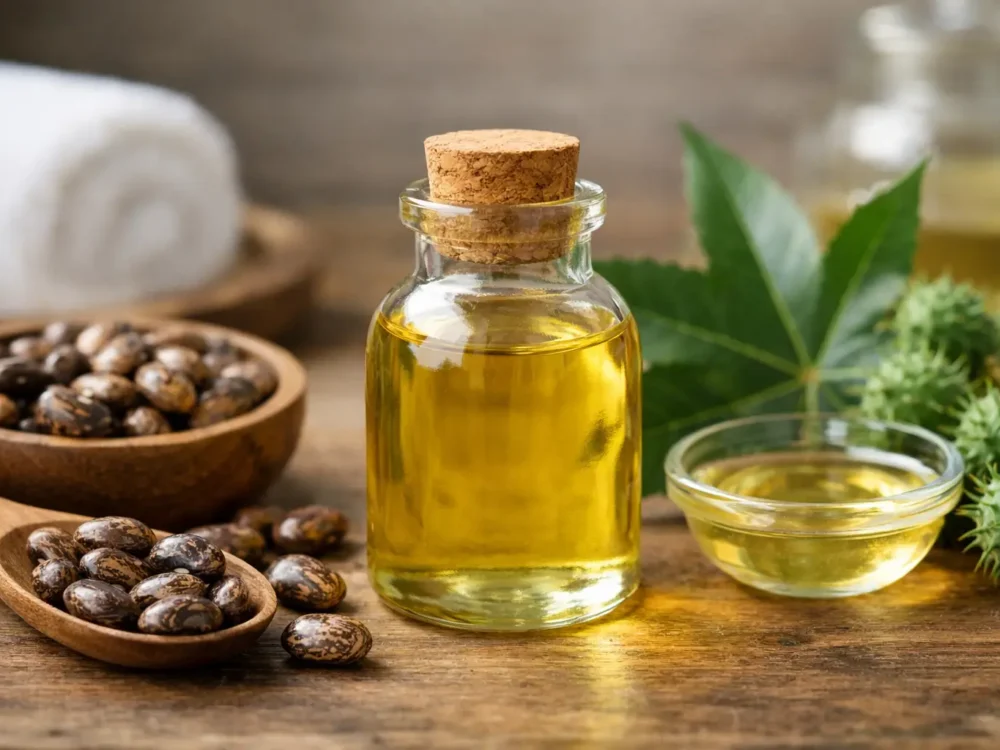
A good organic castor oil usually feels thick but workable. It should have body, glide slowly, and leave a rich layer without feeling like glue. The finish should be nourishing rather than oddly greasy. On the scalp, that often means it works best in small amounts or blended with a lighter oil. On dry elbows, cuticles, or brows, that richer texture can actually be a plus.
The scent should also be mild and natural. Castor oil is not a fragrance product, so a neutral earthy smell is normal. But a strong rancid note or chemical smell suggests poor storage, low quality, or processing issues. For a product used close to the face, scent tolerance matters more than people expect.
The real-world benefits and trade-offs
The reason castor oil keeps showing up in beauty and wellness routines is simple – it is versatile. Many people buy one bottle and use it for scalp massage, hair ends, brows, lashes, and rough skin. That kind of multipurpose value is appealing, especially if you prefer a simpler routine with fewer products.
For hair, castor oil is popular because it helps create the feeling of deep conditioning and moisture retention. It can make strands look shinier and feel more protected, especially when dryness or breakage is the main issue. For scalp massage, the thicker texture can help the oil stay where you apply it instead of running everywhere.
But this is where a balanced review matters. Castor oil is not magic, and it is not the right fit for every hair type or every user. If your scalp gets congested easily or you dislike heavy products, straight castor oil may feel like too much. If your hair is very fine, using too much can leave it looking weighed down rather than healthy. In those cases, a lighter application or mixing it with another oil often works better.
For skin, the same logic applies. On very dry spots, castor oil can feel comforting and protective. On acne-prone or reactive skin, it depends. Some people tolerate it well in small amounts, while others prefer not to use a heavy oil across larger areas of the face. Patch testing is the practical move.
Who should buy it and who should skip it
An honest organic castor oil review should be clear about fit. This product makes the most sense for shoppers who want a traditional wellness staple with modern convenience. If you like products that can do more than one job, castor oil is easy to justify. It can support a simple hair-and-skin routine without adding five different specialty products to your cart.
It is especially appealing for people focused on dryness, brittle hair, scalp massage, brow grooming, and rough skin areas. If you want something lightweight, fast-absorbing, and invisible within seconds, castor oil is probably not your match. This is a richer product, and that richness is both its main benefit and its main compromise.
Busy professionals and routine-driven buyers should also think about usability. If you know you will not spend time on elaborate self-care steps, choose a bottle and format that make application easy. The best product is the one you will actually use two or three times a week, not the one with the most ambitious claims.
How to judge value in an organic castor oil review
Price matters, but value is not only about getting the cheapest bottle. A lower-priced oil that leaks, smells off, or feels poor quality is not a better buy. With castor oil, value comes from the full experience: ingredient integrity, ease of use, and how many routines one bottle can cover.
A solid product should clearly communicate what it is and what it is not. Look for straightforward labeling, organic certification where applicable, and no filler ingredients if the product is marketed as pure castor oil. If the brand also emphasizes cruelty-free, vegan, and non-GMO standards, that tends to align with what many wellness shoppers already want from their daily-use products.
This is also one of those categories where promotions and bundle savings can genuinely make sense. Because castor oil is often repurchased for ongoing hair and skin routines, buying from a retailer that makes replenishment easy can improve the overall experience. Sterling Nutrition, for example, speaks directly to shoppers who want clean-label products without overcomplicating the decision.
Final verdict on organic castor oil
If you want a lightweight beauty oil, castor oil will probably feel too dense. If you want a rich, multipurpose staple that supports scalp care, smoother-looking hair, and targeted moisture for dry areas, it earns its place quickly.
The best organic castor oil is not the one with the loudest promise. It is the one that is pure, well-packaged, easy to work into your week, and consistent enough that you keep reaching for it. That is what makes it worth buying.
A smart purchase comes down to matching the oil to your routine, not forcing your routine around the oil. When the texture, quality standards, and use case line up, castor oil stops feeling messy or old-fashioned and starts feeling like one of the most practical bottles on your shelf.